Characterization of exposure scenarios relevant to Non-Apis bees via nesting and hibernating matrices
Objectives
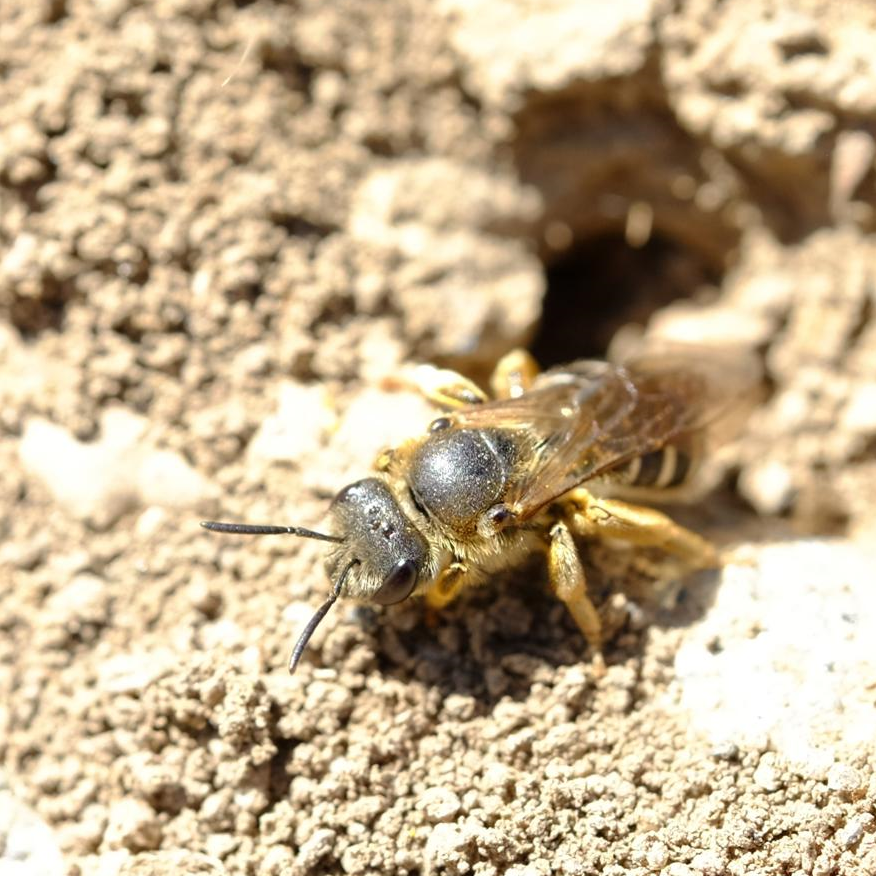
To conceptualize a series exposure scenarios that are specific for: non-Apis bee species, life stage, application method, nesting/overwinter matrix, and exposure site (on-field, off-field).
To compile relevant information for bees and chemicals to enable the calculation of
exposure via soil and leaves and put this information in context to estimate risk values (RQs).
To identify trends and rank the specific scenarios from lowest to highest potential
risk.
To compare exposure via nesting/overwintering materials (soil, leaves) with dietary route of exposure (pollen and nectar).
Background
This project addresses a key uncertainty in the US EPA Pollinator Risk Assessment framework by evaluating non-dietary pesticide exposure routes for non-Apis bees (solitary and bumble bees) via nesting and hibernating matrices (a pathway currently excluded from standard exposure models). By synthesizing bee ecology, toxicity endpoints, chemical physicochemical properties, and use patterns, we will calculate realistic exposure estimates from these matrices and compare them against toxicity endpoints to quantify risk. Furthermore, we will benchmark this non- dietary risk against the dietary exposure quantified in EPA's BeeREX model. The central objective is to determine whether incorporating non-dietary matrix exposures alters overall risk conclusions compared to existing regulatory models.